
The Pits (2)
Nondula Ch 9 (2)

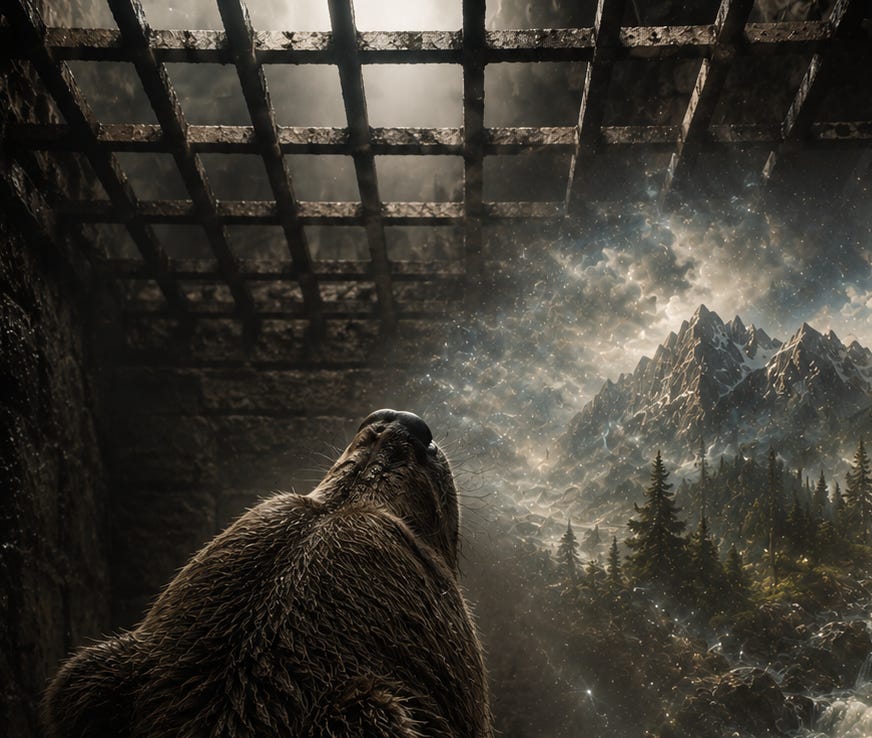
The tunnel opened into another cavern. On either side were filthy stables. All kinds of hooved animals stood in mire their heads hanging low. Some nosed at nets of straw. Everything was rotting, crumbling, mouldy and strung with dirty webs and dungpod. ‘This is Murkbarn,’ said the keeper, ‘which runs into Fowlscop.’
The fowl pens and bird cages were caked in green guano. The birds hid themselves in the corners of the cages and kept their eyes closed. Beyond Fowlscop lay cratered miles of misery. ‘Home,’ said the keeper, ‘otherwise known as The Pits. Get your nose in here.’ He took a long noisy inhale. ‘Now that is what I call full-bodied air.’
The air was thick with animal smells, neglect and fear. Lining the walkways were grille-covered pits where the animals paced out their boredom or lay in matted dejection.
‘Watch where you put your feet,’ said the keeper. ‘Slip and you’re small enough to go through the bars. There’s things down there that would be happy to take your leg off.’
Oy trod cautiously at first, then, as he looked into the pits and cages, he forgot his fear. I’m not here to hurt you, he thought. I’ll be locked up just like you, but if I can ever free you I will. The cats had their own smell. Black cougars with jewels for eyes, flowed and slunk like oil. The next pit held a furious ball of spitting, scratching wild cats. When there were more yeowls than snarls the ball fell apart. The cats crept to the sides of the pit, their bellies low to the ground. They licked their paws and passed them over scarred faces, torn ears, and fur wet with blood.
‘Give ’em a minute and they’ll be back at it,’ said the keeper.
A regular thudding sound came from the next pit. Oy looked down. A stag with fractured antlers butted the wall again and again. The jimps were the only animals to take an interest in Oy. Their long fingers wrapped around the grille as they pulled themselves up. When Oy smiled at them they turned their lips inside out showing square brown teeth.
The cavern narrowed. ‘Bear Passage coming up,’ said the keeper.
The passage was long and hot and smelly with the heat of dusty pelts. At the far end were disused pits, with crumbling walls and broken troughs.
They came to a pit that seemed empty, then Oy saw a dark pile of fur laying in a corner. Flies buzzed around its head and rear. Oy was filled with pity; he lingered for too long. A great black head reared just below his feet. Oy stood panting, unable to move. The bear gave a low, threatening growl.
‘Old Bruin, if he wasn’t ailing he’d punch that grille out,’ said the keeper. ‘That’s the first time he’s moved in days. The scent of you has made him curious.’ The keeper took Oy by the shoulders and held him close to the grille. ‘Here, is this what you want? He wouldn’t make more than a mouthful for you, bones and all.’ Oy pulled back and the keeper let him go. ‘He’s scary the first time you see him, but he’s all posturing these days. He’s the granddad of most of these other bears. The Fellona’s saving him for something special. I can tell you now, by the time he goes for slaughter, Bruin’s blood will be near black: all that age and rage building in him. A warrior drinks that blood and his own is fired with meanness. The prize will be the liver. Do you know why they call it liver? Because a good one, a good angry liver, lives on after you spring it from under the rib cage. Bruin’s will be black and glossy and frothy with black blood; yes, slippery and flipping with anger like a gasping fish it will be. That liver would send a Berd looking for his sword. My guess is it will go to the next husbind. See inside my mouth.’ The keeper gaped at Oy. ‘I’ve got a warrior’s mouth. That’s from eating liver. I get more than my share down here. Blackmouth Burf they call me.’
Burf moved on but Oy lingered. He looked into the bear’s eyes and something happened. Ede had showed him how to talk to animals but he wasn’t very good at it.
‘Look into the eyes,’ she had said, ‘now look behind and behind, and look behind again. Do you see?’
This time Oy saw, and caught his breath. He saw the bear’s real nature; behind its fear, its misery and its anger he saw its wild heart. Its nature was seamless with mountains, pines and rivers, and for one moment it was seamless with Oy. And they took you away and boxed you up, thought Oy. The bear growled again, but this time it was higher, gentler, almost questioning. It tilted its nose and stepped closer, its feet shuffling in the straw far below. It stretched its matted neck and chest as high as it could, and very delicately sniffed.
‘Keep movin’,’ said Burf. ‘He can’t reach you, long as you don’t slip.’
‘You’re beautiful,’ Oy whispered to the bear, ‘wild and strong and beautiful. I’m honoured to make your acquaintance.’
‘Come on, you lily,’ called the keeper. ‘Stop looking down or you’ll never get past him.’
The next cavern was full of pigs.
‘A snorter pit will do for you,’ said Burf. He swung the lamp side to side and Oy could see speckled pigs in the shallower pits. ‘Here’s an empty one.’ He lifted the grate, dangled Oy over the pit and dropped him.
Oy landed on straw clotted with pig dirt. When his eyes got used to the dimness he sat down in a corner with his arms around his knees. After a while he got up and walked around the cell. There was nothing else to do. Again the strange pictures came into his head, like waking nightmares. Again the nausea and the sadness of loss. Towards evening the keeper dropped a flask and a bag of seed through the bars. Oy chewed on the seeds which were hard as pebbles, then he sorted the cleaner bits of straw and made a bed. The floor was cold and knobbly. Whichever way he lay a knuckle of stone pressed against his spine or ribs. It was worse than the bottomest basement. The animals shuffled, turned in their beds or paced the night away. Oy did the same.
The next day Burf let him out, blearily gave him instructions and went back to bed. Oy carried buckets of swill and greens from one pit to the next. He heard things while he worked – animal sounds of panic and fear, answering calls from other animals, the thud of lifeless bodies. And he saw the slorterboys emerge from the pits with the dead slung round their shoulders like capes.
As the days passed the animals came to know Oy’s light step. He went down into the pits and stroked and comforted them. But the boars and big cats he left alone. Burf poked and prodded them without mercy. He branded them with glowing metal, he dusted them with itching powders, he teased them with live food hung just out of reach. He did it so their organs would be bloated and blackened with anger. Oy dropped the food through the grilles; it was not safe to do anything else. The only place Oy did not go was Bear Passage. Burf said it was too dangerous. Oy was proving useful. He did not want to lose him.
Time went on and Oy began to feel foolish and ashamed. How vain to think the Felluns would take notice of him, and that he could help where wiser heads had failed. Now he must live out his days, coffined in stone and stink, locked away from daylight, far from his friends. Far from his friends – that hurt the most. Only the animals made it bearable. They were his friends now.